The Ultimate Guide to Prints & Patterns: 48 Types Explained
A guide to prints and patterns used in fashion, art, and design. Covering everything from florals and checks to geometric designs and animal prints.
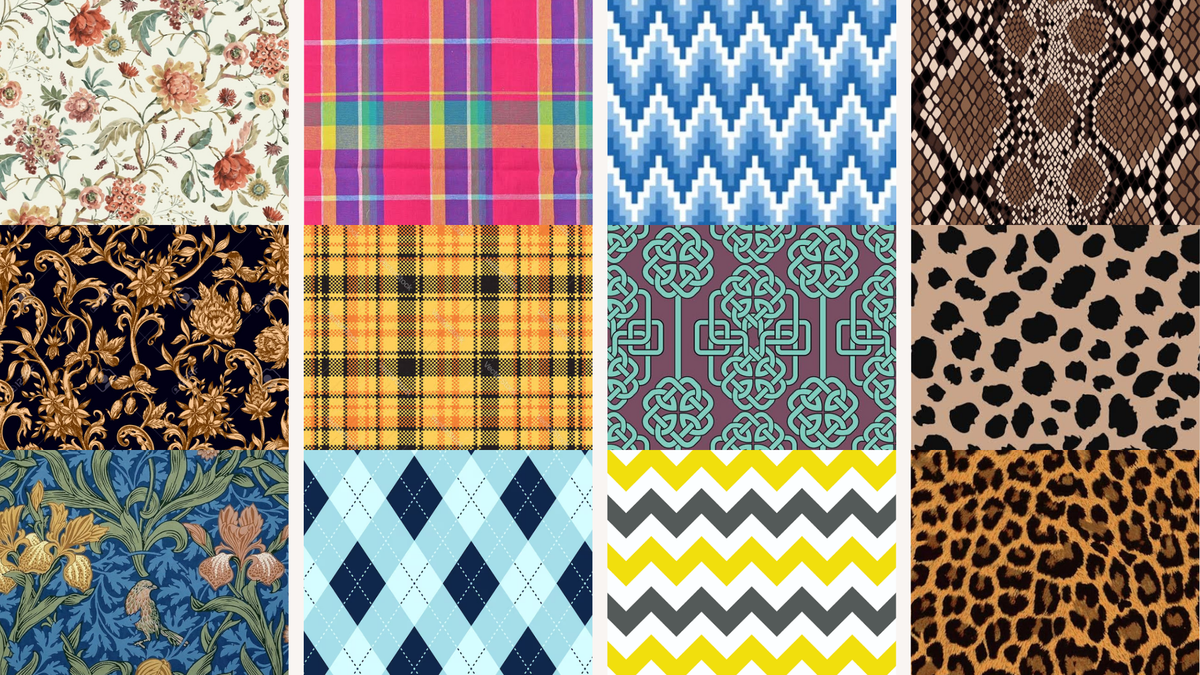
Repetitive patterns are one of the oldest visual tools humans have used to tell stories on fabric, stone, and metal. Long before trends and runways, patterns were used to signal status, region, craft, rebellion, and even belief systems. From palace-born florals to countryside checks, sacred geometrics to untamed animal markings, every design carries a history and a structure behind it. This guide breaks down some of the most important families of prints and patterns, as well as their subtypes as a way to understand where these designs come from, how they differ, and why they continue to resurface across fashion and design.
FLORALS
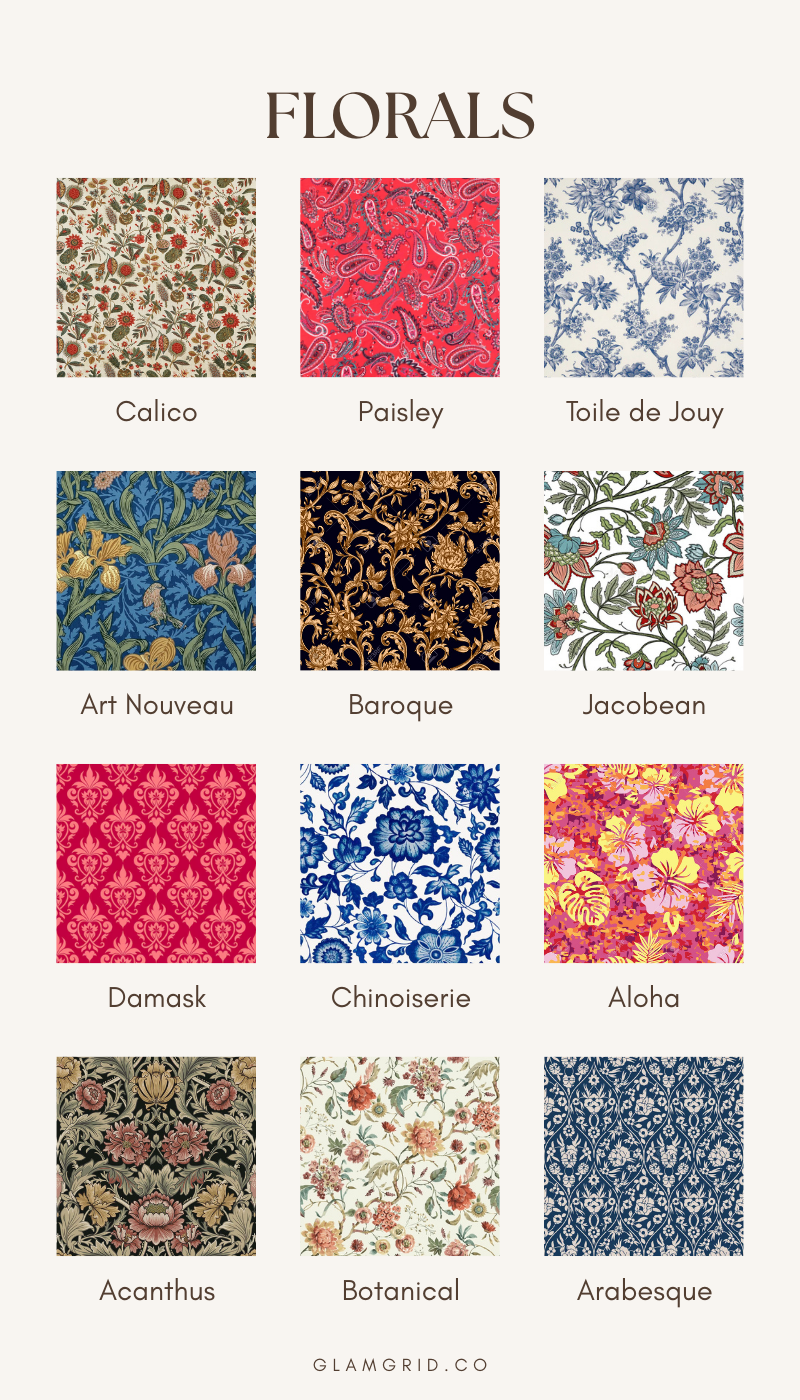
Calico: Small, repetitive floral motifs traditionally printed on plain cotton grounds.
Paisley: Teardrop-shaped ornamental motif of Persian origin, associated with bohemian and vintage aesthetics.
Toile de Jouy: French-origin fabric with detailed pastoral scenes and florals, usually monochrome on a light background.
Art Nouveau: Flowing, curvilinear floral designs inspired by organic forms and 19th-century decorative art.
Baroque: Dramatic, high-ornament floral patterns with heavy scrolls and rich visual density.
Jacobean: Stylised, exotic florals with vines and leaves, originally from 17th-century English textiles.
Damask: Reversible woven floral patterns with a subtle sheen and tonal contrast.
Chinoiserie: Decorative floral and nature motifs influenced by traditional Chinese art and landscapes.
Aloha: Bold, tropical florals associated with Hawaiian shirts and resort wear.
Acanthus: Classical leaf motif rooted in Greek and Roman architectural decoration.
Botanical: Realistic, scientifically inspired illustrations of plants and flowers.
Arabesque: Intricate, repeating floral and vine patterns based on Islamic decorative traditions.
CHECKS
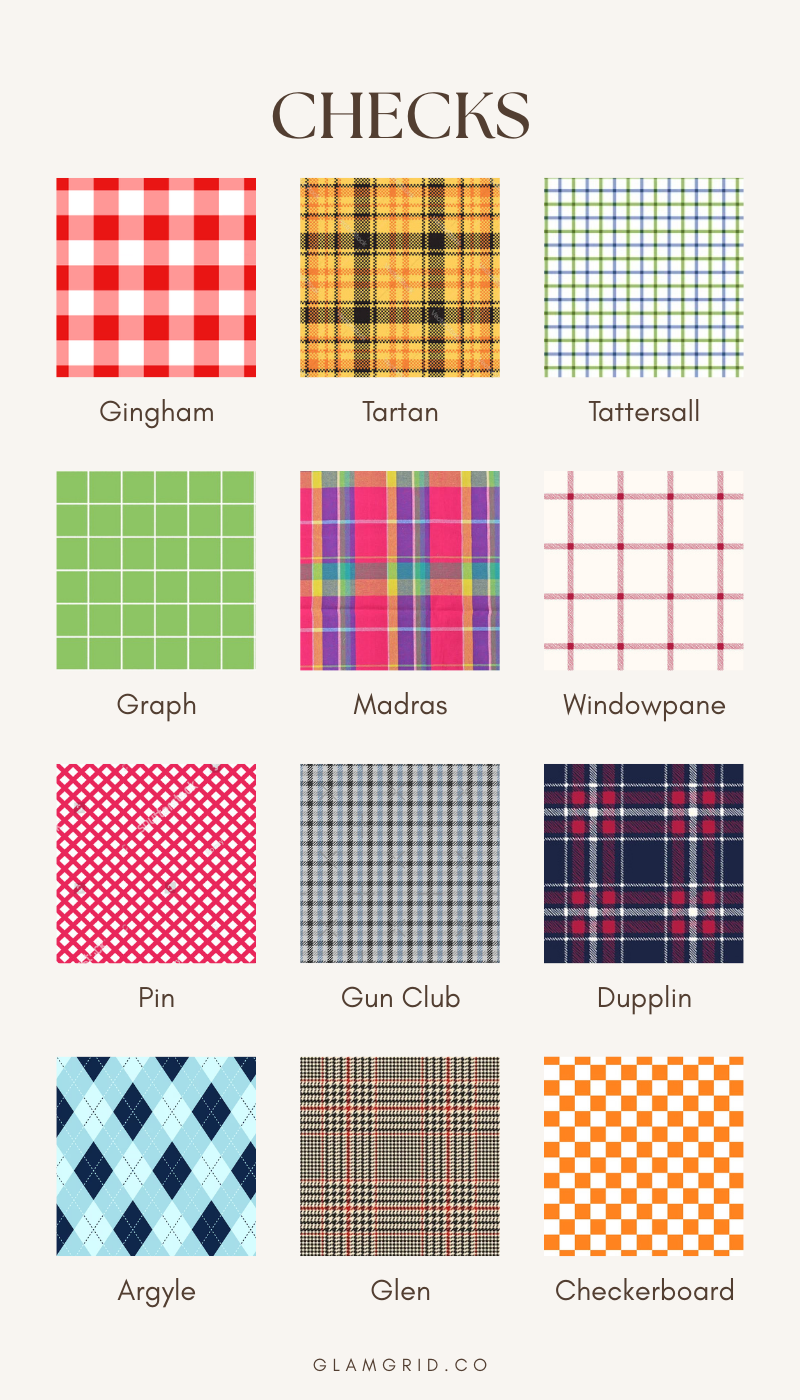
Gingham: Even-sized, simple checks in two colours, giving a fresh and casual look.
Tartan: Multicoloured criss-crossed checks historically linked to Scottish clans.
Tattersall: Thin, evenly spaced stripes forming understated square checks.
Graph: Clean, grid-like checks resembling graph paper.
Madras: Lightweight, brightly coloured plaid originating from India.
Windowpane: Large square checks formed by thin, widely spaced lines.
Pin: Very fine, tight checks that appear almost textured from afar.
Gun Club: Scottish-origin plaid with distinctively Intersecting lines which was popularised by American Gun Club.
Dupplin: A traditional British check made from layered small and large checks.
Argyle: Diamond-shaped checks often overlaid with diagonal lines.
Glen: Small, complex interlocking checks associated with tailored suiting.
Checkerboard: Bold, evenly spaced squares in high-contrast colours.
GEOMETRIC
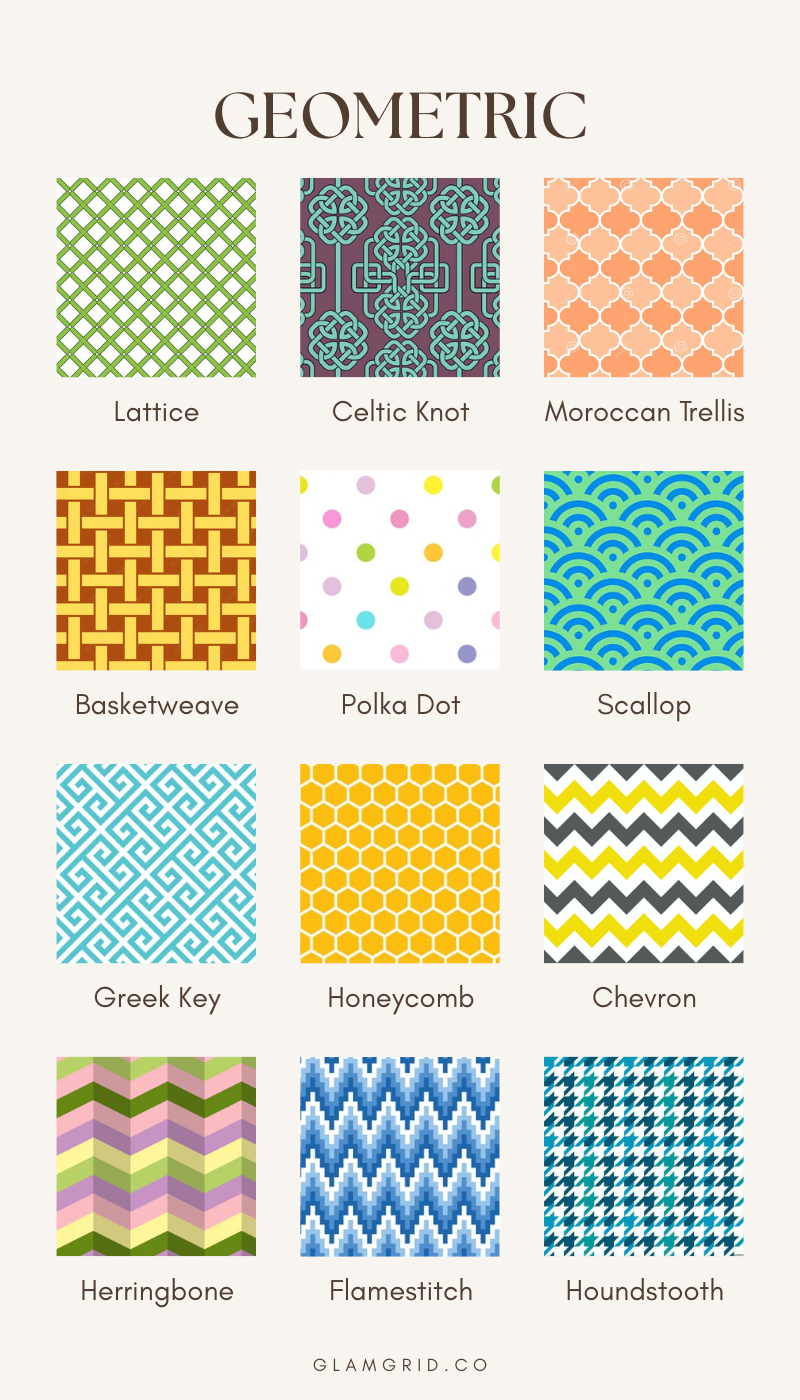
Lattice: Intersecting lines forming a decorative criss-cross framework.
Celtic Knot: Interwoven, continuous line motifs symbolising eternity and unity.
Moroccan Trellis: Ornate geometric grids inspired by Islamic tilework.
Basket Weave: Interlaced pattern mimicking woven strips.
Polka Dot: Evenly spaced circular dots, playful yet timeless.
Scallop: Repeating semi-circular curves resembling shell edges.
Greek Key: Continuous linear motif built from right-angled turns.
Honeycomb: Repeating hexagonal cells inspired by beehives.
Chevron: Zigzag stripes forming continuous inverted V shapes.
Herringbone: Broken zigzag pattern resembling fish bones.
Flame Stitch: Sharp zigzag embroidery pattern creating a flame-like effect.
Houndstooth: Broken check pattern forming abstract four-point shapes.
ANIMAL
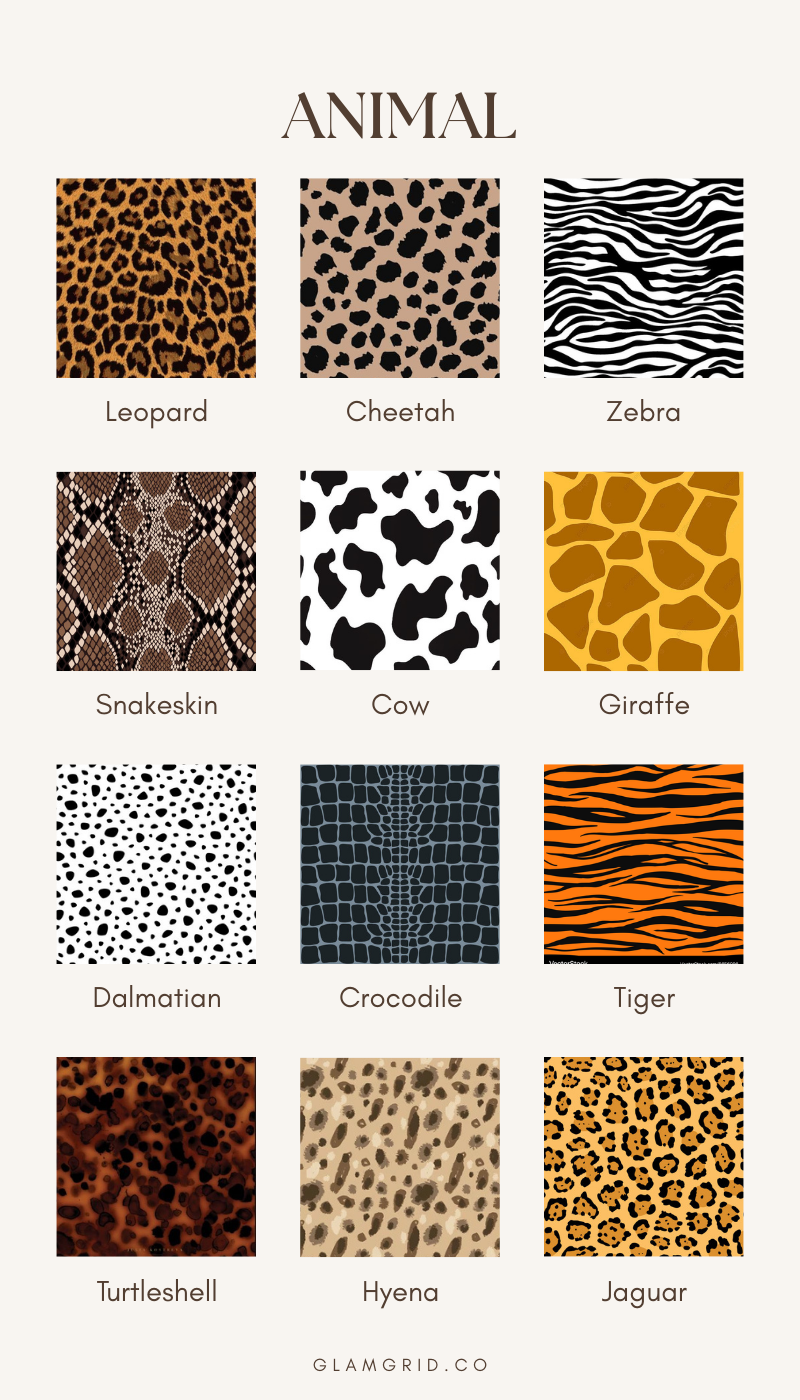
Leopard: Rosette-shaped spots symbolising bold glamour.
Cheetah: Small, solid black spots on warm golden grounds.
Zebra: High-contrast black and white stripes with graphic impact.
Snakeskin: Layered scale pattern with exotic texture.
Cow: Large, irregular black or brown patches on white.
Giraffe: Mosaic-like polygon spots separated by pale lines.
Dalmatian: Clean, evenly spaced round spots.
Crocodile: Rectangular, armour-like scale formations.
Tiger: Flowing, powerful dark stripes on warm bases.
Tortoiseshell: Mottled amber and brown marbling inspired by turtle shells.
Hyena: Uneven, coarse spotting with a raw, untamed feel.
Jaguar: Larger rosettes with central dots, richer and bolder than leopard.
When you start looking at patterns through their origins and structures, fabric stops being just decoration and starts becoming information. Each is a visual system shaped by history, geography, technology, and human taste. Trends may decide when a print becomes popular, but it’s this deeper framework that decides why it survives. The more familiar you are with these patterns, the more clearly you can read fashion and art as a language rather than a surface.